
but it can also come with new challenges. The pickup basketball game that once felt easy might leave you sore for days. Your golf swing may feel tighter. You might notice you’re not as fast, strong, or mobile as you used to be.
These changes don’t mean it’s time to stop competing. They mean you need to change your approach to training.
Understanding the biggest sports performance issues adults face can help you train smarter, reduce your injury risk, and keep enjoying the activities you love.
As we age, maintaining strength, mobility, balance, power, and endurance becomes increasingly important. Recovery can also take longer, especially when training isn’t designed around your current abilities.
For athletes involved in adult sports, this can show up as decreased speed, reduced power, stiffness, longer recovery times, or recurring aches and pains.
That’s where a more individualized approach to sports performance training can make a difference. Rather than simply working harder, performance training focuses on qualities such as strength, speed, power, agility, mobility, and the specific demands of your sport.
The goal isn’t to train as you did 20 years ago. It’s to build a body that’s prepared for what you want to do today.
A common question among active adults is: How long does it take to lose muscle?
There’s no single answer. Your age, activity level, nutrition, training history, and how long you’re inactive can all influence how quickly strength and muscle begin to decline.
The bigger concern is allowing inactivity to become the norm.
Regular resistance training can help maintain muscle and strength while giving your body the foundation it needs for everyday activities and sports. A structured fitness program can also help you build strength, conditioning, and mobility based on your goals and abilities.
Consistency becomes increasingly important as you get older. You don’t necessarily need to train every day; you need to train regularly and with purpose.
Another major challenge for adult athletes is injury.
Some common sports injuries can involve the knees, shoulders, ankles, hips, elbows, and lower back. Strains, sprains, tendon irritation, and overuse injuries may become especially frustrating when they repeatedly interfere with the activities you enjoy.
Often, the problem isn’t simply age. Training volume, mobility restrictions, strength deficits, previous injuries, poor recovery, and sudden increases in activity can all contribute.
Ignoring persistent pain and continuing to push through it can potentially turn a manageable issue into something that keeps you away from your sport for much longer.
If you’re wondering how to prevent sports injuries, one of the best places to start is preparation.
Your body needs to be ready for the demands you’re putting on it.
That means building strength, maintaining mobility, warming up properly, gradually increasing training intensity, and allowing enough recovery time.
A good training program should also address the movements your specific sport requires. A golfer, runner, basketball player, and tennis player all place different demands on their bodies.
Learning how your body moves and where you may have limitations can help you take a more targeted approach to performance and injury prevention.
Strength is one of the most important foundations for staying active.
Benefits of strength training for older adults include supporting muscle mass, balance, stability, movement quality, and overall physical capacity.
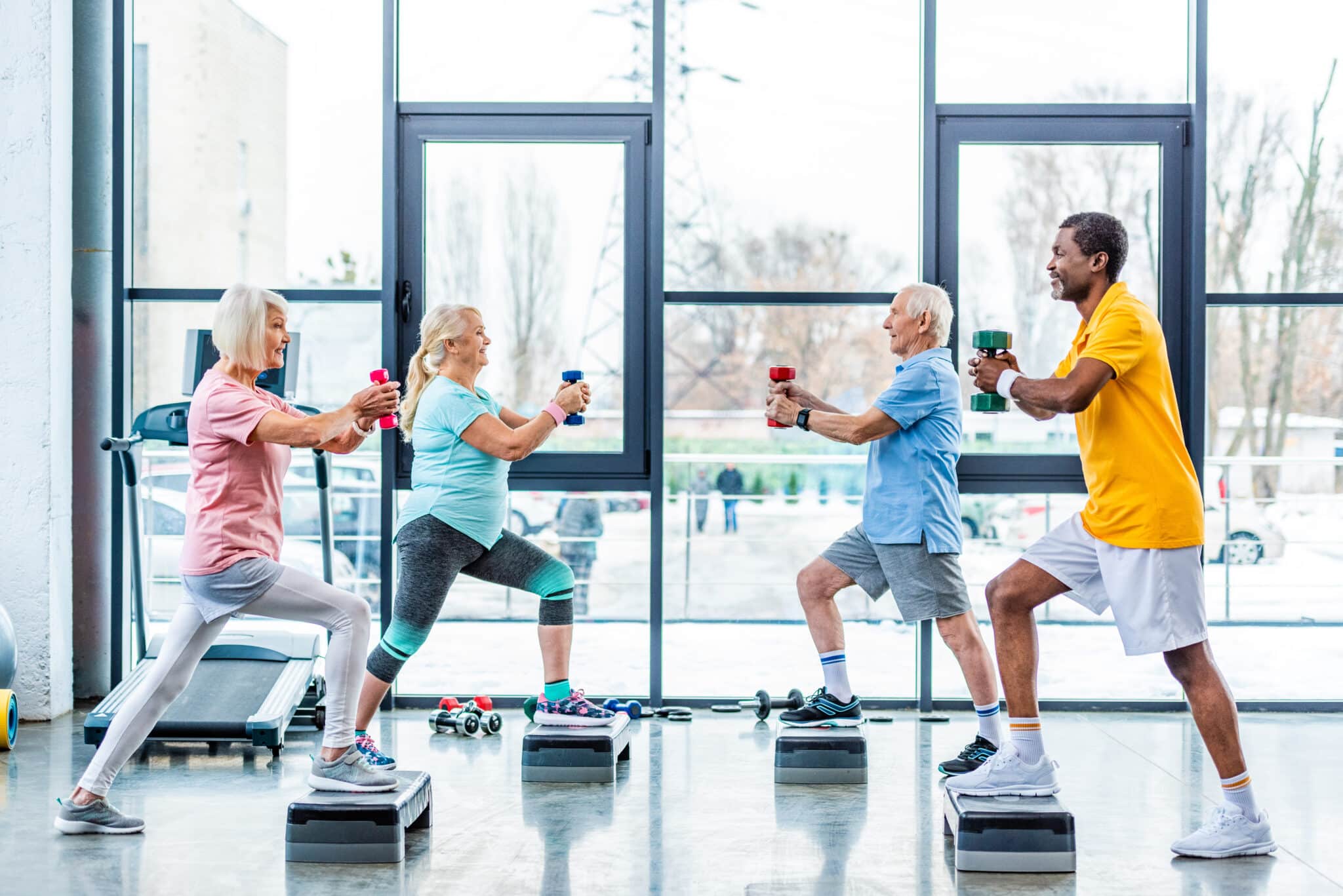
Effective strength training exercises for older adults might include squats, lunges, rows, presses, deadlift variations, step-ups, loaded carries, and core stability exercises. However, choose exercises based on the individual’s experience, movement abilities, and goals.
You don’t need to chase your old personal records to benefit from strength training.
Focus on building and maintaining the strength you need to keep doing the things you enjoy.
When pain or an injury begins affecting your ability to train, sports injury and physical therapy often go hand in hand.
Physical therapy isn’t necessarily just about getting out of pain. For active adults, rehabilitation should also help restore movement, rebuild strength, and prepare the body to return to activity.
At Elevate Sports Performance & Healthcare, we bring together physical therapy, chiropractic care, fitness training, sports performance, golf performance, and recovery services so rehabilitation and performance don’t have to be treated as separate goals.
The goal is to address what is limiting you while also building the physical capacity needed to return to the activities you enjoy.
One of the biggest mistakes adults can make is assuming that better performance always requires harder workouts.
Sports performance training for adults should instead focus on what the individual athlete actually needs.
That could mean building strength, improving mobility, increasing power, working on balance, or improving your ability to accelerate and decelerate.
Your training should also evolve as your body changes.
Assessing your current movement and performance can help identify areas that need improvement rather than relying on a generic workout. The result is a training program built around your sport, your body, and your goals.
Golf is a great example of why sport-specific training matters as we age.
Effective golf training isn’t only about hitting more balls at the driving range. Mobility, rotational strength, balance, power, and how efficiently you use your body can all influence your performance.
Elevate’s Golf Performance program takes a body-first approach, using movement assessments and technology such as 3D motion capture, pressure mapping, and power testing to understand better how a golfer creates speed and controls their swing.
The same principle applies to other adult sports: train for what your sport demands.
Getting older doesn’t mean becoming less competitive. It means being more intentional about how you prepare your body.
Prioritize strength. Maintain mobility. Give yourself enough time to recover. Address injuries instead of ignoring them. Most importantly, build a training approach that allows you to keep participating in the sports and activities you enjoy.
You may not train the same way you did when you were younger, and that’s okay. The goal is to train smarter so you can keep performing for years to come.


A collective of Chiropractors, Physical Therapists, Sports Medicine, Performance Training, Personal Training, Massage Therapists, and Nutrition for your health and fitness.
Services
Quick Links
Get In Touch
Elevate Sports Performance & Healthcare Las Vegas
6658 W Sunset Rd, Suite 170
Las Vegas, NV 89118
© Copyright 2025 Elevate Sports Performance & Healthcare | All Rights Reserved.
Built by Arctic Blue Studio